
I won’t lie, the first time I tackled a big roast for the holidays, I was absolutely terrified. Visions of dry, grey beef haunted my dreams! But you guys, learning how to cook the perfect Prime Rib Roast can seem daunting, but this simple Prime Rib Roast recipe changes everything. It’s the one I swear by now, year after year, because it skips all the complicated stuff—no wrapping in salt crusts or weird overnight brining required.
This method is foolproof. It uses just a few powerhouse ingredients we all have, and the dual-temperature blast guarantees you get that incredible outer crust while keeping the center gloriously pink and tender. Trust me, after you nail this, you’ll feel like a culinary wizard. Your guests will definitely ask for the secrets to this amazing roast beef!
Why This Prime Rib Roast Recipe Delivers Tender Results
I know you hear “Prime Rib Roast” and think of fussy chefs, but this method keeps things wonderfully simple while delivering maximum flavor. My goal here is zero stress when that big beautiful roast hits the table.
Key Attributes of Our Prime Rib Roast
- It relies on minimal, high-quality seasonings—no complicated pastes needed!
- The high-heat blast followed by a lower temperature cooks the meat evenly, locking in those glorious juices.
- We insist on the resting step; honestly, skipping it is criminal, it’s just as important as the roasting itself.
If you want to check out another ridiculously easy, tender beef option for a different night, this classic pot roast recipe is fantastic too!
Essential Ingredients for Your Prime Rib Roast
When it comes to a show-stopping meal like this, the ingredients list is short, which means quality really has to shine through. You’ll need a beautiful piece of beef, ideally between five and seven pounds, to start. Since this Prime Rib Roast recipe puts the meat front and center, you want the best cut your butcher has. If you can swing it, talk to your local butcher! They always know the best marbling for a succulent result.
Then we just need texture and aroma boosters: coarse salt—don’t skip the coarse part, it makes a huge difference in the rub—freshly cracked black pepper, some garlic powder for that warm backbone, and dried rosemary. Don’t forget the olive oil; it’s key for helping all those wonderful spices stick right to the surface of the meat so they can penetrate as it roasts.
Selecting the Best Cut for Your Prime Rib Roast
You have the choice between bone-in or boneless, and honestly, I love bone-in because I think the bones actually help insulate the meat and keep the bottom end from overcooking. If you go bone-in, just remember you need a slightly bigger roasting pan! If you choose boneless, it carves way easier, which is nice if you’re nervous about slicing at the table. Just remember that a larger roast will naturally take longer to reach that perfect internal temperature, so always trust your thermometer over the clock!
Equipment Needed for the Perfect Prime Rib Roast
Okay, you don’t need a million gadgets for this recipe, which I love, but you absolutely must have two things ready to go. First up is a sturdy roasting pan. You need something deep enough to catch all those amazing drippings without overflowing onto your oven floor—no one wants that mess!
But here’s the deal-breaker, the one thing you cannot skip, especially when dealing with a big cut of beef: a reliable meat thermometer. Seriously, if you try to guess your way to doneness, you risk ending up with tough, overcooked meat. Insert it into the thickest part, away from the bone, and let it tell you when this roast is done. It’s non-negotiable, I promise!
Step-by-Step Instructions for a Simple Prime Rib Roast
This is where the magic happens, and I promise it’s dead easy. The key to a stellar Prime Rib Roast is getting that initial blast of heat on it to build flavor, and then settling in for the slow cook. First things first: this roast cannot be fridge-cold when it goes in the oven! Pull it out two hours ahead of time. I know it feels weird leaving that expensive beef out, but if it’s cold inside, the outside will cook way too fast—we want even cooking!
If you’re interested in another amazing beef experience, you really need to check out this sirloin tip roast recipe I shared recently. It has a slightly different flavor profile but is just as tender!
Preparing and Seasoning the Prime Rib Roast
While that roast tempers, mix up your dry rub: salt, pepper, garlic powder, and rosemary. Whisk it all together until it looks uniform. Next, grab that lovely olive oil and gently rub it all over the surface of the beef. It doesn’t need much; it just acts like the glue for our spices. Then, sprinkle that mixed seasoning over every square inch and pat it in firmly. You want a beautiful, crusty layer ready to go when the oven is screaming hot.

The Two-Stage Roasting Method for Prime Rib Roast
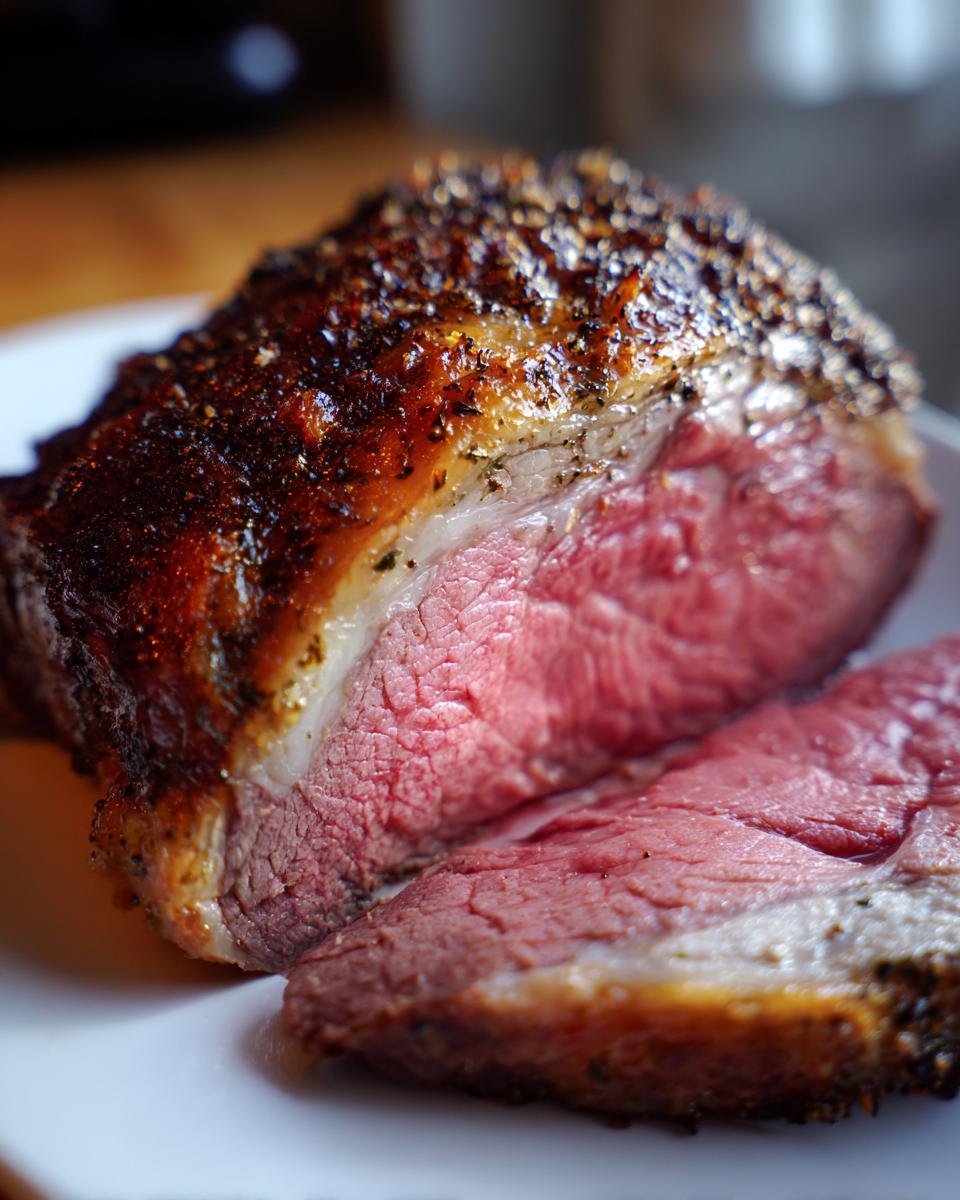
Get your oven hot—I mean 450 degrees F hot! Put the roast fat-side up in your pan and let it roast there for exactly 15 minutes. This is my personal favorite trick, that initial blast really sets up that amazing outer texture. Immediately after those 15 minutes, drop the temperature way down to 325 degrees F. Now, it’s a waiting game. You are waiting for that internal thermometer to hit 125°F for rare or 135°F for medium-rare. Do not take it out early! Trust the thermometer; it is your best friend here.
Resting Your Prime Rib Roast
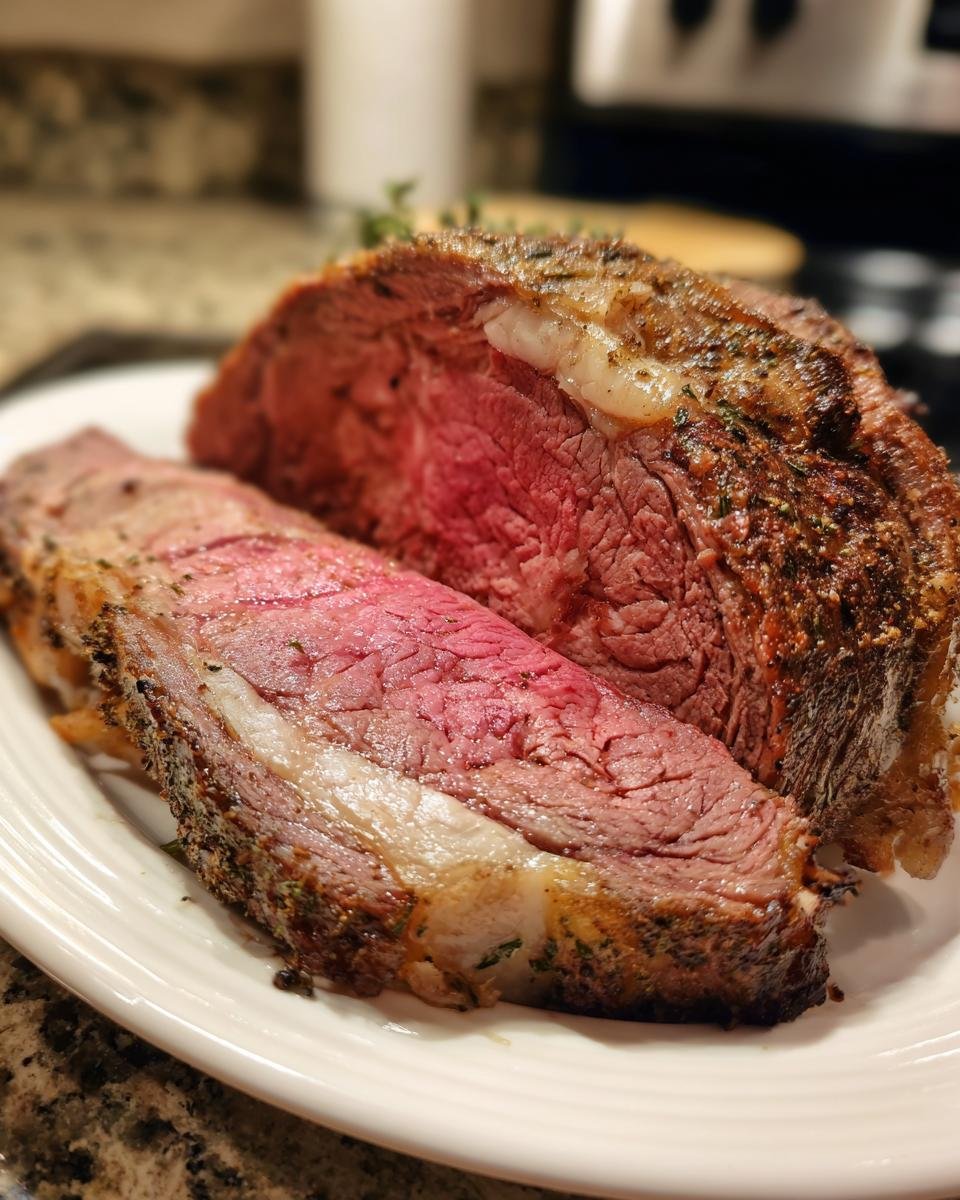
When you finally pull that gorgeous roast out, it might look slightly underdone, but trust me, it’s not. Tent it loosely with foil—and I mean loosely so the steam doesn’t make your crust soggy—and walk away for 15 to 20 minutes. This mandatory resting time lets all those incredible juices redistribute themselves deep into the muscle fibers. If you slice it right away, all that beautiful moisture runs right out onto your cutting board. Don’t sacrifice the juices!
Tips for Success with Your Prime Rib Roast
Even with the best instructions, sometimes little things throw a wrench in the works when you’re cooking a tender roast beef. The first and most important piece of advice for success on your Prime Rib Roast is this: never doubt the thermometer. Don’t just poke it once, either! Check the temperature in a couple of different spots in the thickest section to make sure you aren’t reading a hot spot near the pan.
Secondly, think about carving. When it’s rested, if you pulled a bone-in roast, take a minute to saw those bones off before you attempt slicing the meat across the grain. This makes the final slicing so much neater. Speaking of slicing nicely, I always recommend using a long, sharp carving knife. If you need extra help visualizing the process sometime, check out this pot roast guide—the carving tips transfer over really well!
Make-Ahead and Storage for Leftover Prime Rib Roast
One of the best parts about making a big, gorgeous Prime Rib Roast is having leftovers the next day! You’ll want to wrap any remaining slices tightly—I like using plastic wrap followed by aluminum foil—to keep the air out. It stays perfectly good in the fridge for about three or four days. Don’t let that beautiful beef sit too long!
When it comes time to reheat those slices, we have to be gentle, or we’ll dry out all the effort we put into keeping the roast moist! The best way, surprisingly, isn’t the microwave. I like to heat a little bit of beef broth or even just water in a pan, bring it to a very low simmer, and gently warm the slices right in that pan for just a minute or two. It steams them ever so slightly and keeps that precious juiciness intact!
Serving Suggestions for Your Magnificent Roast
Now that you’ve mastered the main event, we have to decide what’s joining it on the plate! A rich roast like this deserves sides that soak up those pan juices beautifully. Creamy mashed potatoes are a must-have in my kitchen; I often make mine with roasted garlic for an extra layer of savory depth.
For something vibrant right alongside that richness, you can’t beat simple roasted vegetables. Root veggies stand up so well to the strong flavor of the beef. If you need inspiration for those, my recipe for super easy roasted vegetables is perfect. And if you’re feeling slightly sweeter, try my roasted garlic mashed sweet potatoes—they are divine!
Frequently Asked Questions About Prime Rib Roast
It’s totally normal to have questions when you’re investing time into cooking such a beautiful piece of meat. This is where we talk about how to get that perfect doneness every single time on your Prime Rib Roast.
How long does it take to cook a 6lb Prime Rib Roast?
That’s the million-dollar question, isn’t it? Based on this method, after you do that initial 15-minute blast at 450 degrees, you’ll likely be roasting at 325 degrees for about two hours for a six-pound roast. But please, please, please don’t watch the clock! Oven temperatures vary so much, and the size of your roast plays a huge part. Always rely on your meat thermometer for accuracy when checking the internal temperature of your roast beef.
What is the best internal temperature for rare roast beef?
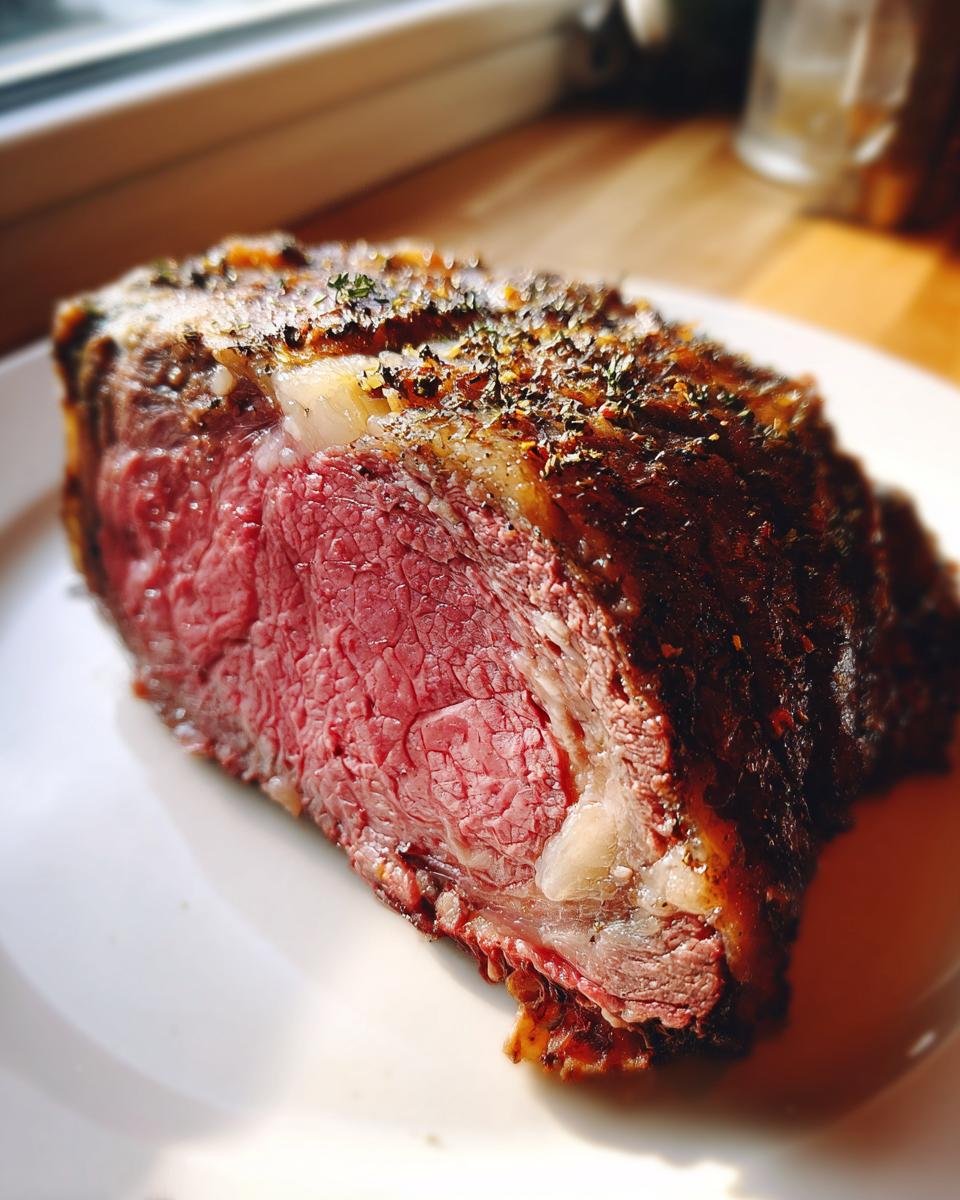
For that classic, beautiful, melt-in-your-mouth rare designation, you want to pull your Prime Rib Roast out of the oven when the thickest part registers exactly 125 degrees F on your thermometer. If you prefer just a touch more cooked—what I call perfect medium-rare—aim for 135 degrees F. Remember to subtract about 5 degrees from your target when you pull it out, because that carry-over cooking while resting will bring it up perfectly!
Nutritional Estimates for This Prime Rib Roast
When you prepare a feast like this, you probably aren’t counting calories, but it’s nice to know what you’re serving up! Based on a 6-ounce cooked serving size, this recipe clocks in around 450 calories. You’ll see that the protein content is wonderfully high, sitting around 40 grams per serving.
Now, just a quick word of caution here: these numbers are estimates, naturally! Since beef cuts always vary in visible fat, the exact sodium and fat content might shift depending on your specific piece of meat. But generally, this is a rich, satisfying main course!
Print
Simple Prime Rib Roast
- Total Time: 140 min
- Yield: 6-8 servings 1x
- Diet: Low Fat
Description
A straightforward recipe for cooking a tender and flavorful prime rib roast.
Ingredients
- 1 (5-7 lb) prime rib roast, bone-in or boneless
- 2 tablespoons coarse salt
- 1 tablespoon black pepper
- 1 tablespoon garlic powder
- 1 tablespoon dried rosemary
- 1 tablespoon olive oil
Instructions
- Remove the roast from the refrigerator 2 hours before cooking to allow it to come to room temperature.
- Preheat your oven to 450 degrees F (232 degrees C).
- In a small bowl, mix the salt, pepper, garlic powder, and rosemary.
- Rub the olive oil over the entire surface of the roast.
- Sprinkle the spice mixture evenly over the roast, pressing it gently into the meat.
- Place the roast, fat side up, in a roasting pan.
- Roast at 450 degrees F for 15 minutes.
- Reduce the oven temperature to 325 degrees F (163 degrees C).
- Continue roasting until an internal temperature of 125 degrees F (52 degrees C) is reached for rare, or 135 degrees F (57 degrees C) for medium-rare. Use a meat thermometer inserted into the thickest part of the roast, avoiding bone.
- Remove the roast from the oven.
- Tent the roast loosely with foil and let it rest for 15 to 20 minutes before slicing.
Notes
- For easier carving, remove the bones before roasting if you have a bone-in cut.
- Use a meat thermometer for accurate doneness; cooking times vary based on the roast size and oven calibration.
- Prep Time: 20 min
- Cook Time: 120 min
- Category: Main Course
- Method: Roasting
- Cuisine: American
Nutrition
- Serving Size: 6 oz cooked
- Calories: 450
- Sugar: 0
- Sodium: 350
- Fat: 30
- Saturated Fat: 12
- Unsaturated Fat: 18
- Trans Fat: 0
- Carbohydrates: 0
- Fiber: 0
- Protein: 40
- Cholesterol: 140
Keywords: prime rib roast, roast beef, holiday roast, beef recipe, oven roast