
Oh, you know that feeling when only true, savory, slightly smoky Cantonese takeout will hit the spot? When you crave those wide, slippery rice noodles completely infused with flavor? Me too! That’s why I spent ages perfecting my home version of **Beef Chow Fun** so we never have to wait for delivery again. Seriously, this recipe is my absolute secret weapon for getting that perfect texture—the noodles have to be tender but still chewy—and nailing that elusive, slightly charred ‘wok hei’ flavor. It all comes together in about 30 minutes, which is frankly astonishing for something that tastes this restaurant-quality. Trust me, once you try it my way, you’ll be making it every single week!
Why This Beef Chow Fun Recipe Stands Out
It’s easy to find a noodle recipe, but finding one that delivers that deep, smoky Cantonese flavor without taking hours? That’s the magic right here. We focus on a few non-negotiable steps that seriously upgrade your final dish. This isn’t just throwing things in a pan; it’s thoughtful cooking!
- We use a super-fast marination trick with cornstarch. It keeps the flank steak unbelievably tender, not chewy!
- The heat has to be screaming high. Honestly, you need to treat your wok like it’s volcanic lava to get that perfect **wok hei** smoky essence.
- Prep time is minimal because everything is staged perfectly. You can be eating authentic fried rice (and noodle dishes like this!) in under 30 minutes. That speed is why this works for a weeknight meal.

Essential Ingredients for Perfect Beef Chow Fun
Okay, listen up, because the quality of your starting ingredients dictates whether you get a delicious dinner or just… sad, mushy noodles. We need precision here, but don’t panic! It’s mostly about getting things cut the right size and marinating when you should.
For the Beef Marinade and Noodles
First, that beef! We only use flank steak here, thinly sliced against the grain—your knife skills gotta be sharp for this, or ask the butcher to do it! The marinade is simple: just soy sauce and cornstarch. That cornstarch is our secret tenderizer; it coats the beef and protects it from the high heat, keeping it silky instead of tough. Then there are the noodles, the **ho fun**. They need a good soak in hot water until they bend easily but they absolutely *cannot* turn mushy. They should still have a little backbone when you pull them out.
For the Sauce Components and Vegetables
The sauce is where that deep savory flavor comes from. You can’t skimp on getting good quality oyster sauce—it’s the backbone of the taste. We boost that with a touch of dark soy sauce specifically for color; it makes the whole dish look restaurant-worthy. Don’t even think about using jarred minced garlic; it has to be fresh, finely minced! The veggies are simple: onions sliced thinly, and green onions cut into nice, chunky 1-inch pieces. They cook so fast, so have everything ready to go!
Expert Tips for Mastering Beef Chow Fun Preparation
Stir-frying is basically a lightning round of cooking, so if you stop halfway through to chop an onion, you’ve already lost the battle! That’s why I preach **mise en place**—get every single ingredient measured, chopped, and laid out next to your stove before the heat even goes on. Seriously, everything needs to be staged and ready to roll.
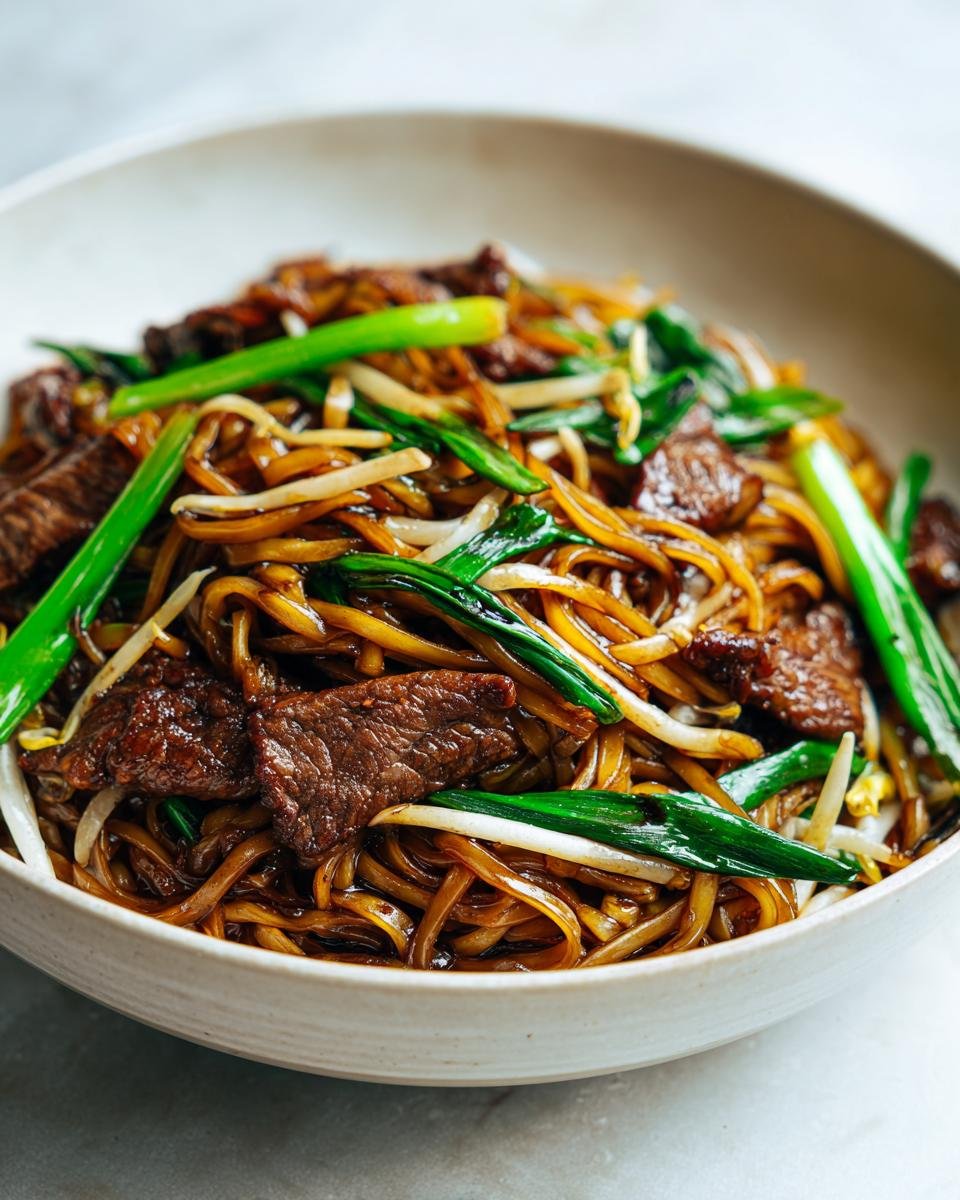
Now, let’s talk about the noodles sticking. It happens, especially if your *ho fun* are a little damp when they hit the wok. If you take them out of the soaking water and they want to cling to each other like sad buddies, just give them a super light toss in about a teaspoon of plain oil—vegetable or canola is fine. It creates a tiny buffer against the high heat.
And if you think you can just toss everything in at once, you’re going to end up with steamed beef and lukewarm noodles! We sear the beef first and *remove* it. This keeps it perfectly browned and tender. Then we build the flavors. If you want that authentic smoky taste, check out my tips for getting those amazing fried noodle textures.
Step-by-Step Instructions for Authentic Beef Chow Fun
This is where the action happens, folks! Because this is a quick stir-fry, you’ve got to move fast once the heat is on. Remember how I said everything needed to be staged? Get those bowls lined up because we barely have time to breathe between adding ingredients. Following these steps ensures you get that wonderful sear on the beef and perfectly coated rice noodles.
Marinating the Beef and Preparing the Noodles
First things first: get those wide rice noodles soaking according to the package directions—usually just hot water until they are bendy but still hold their shape. Drain them really well and let them hang out. While they soak, toss your thinly sliced beef with the soy sauce and that magical cornstarch. Let that sit for a full 10 minutes. Don’t rush that marination step; that’s what locks in the moisture and tender flavor for your final **Beef Chow Fun**!
Stir-Frying the Beef and Aromatics
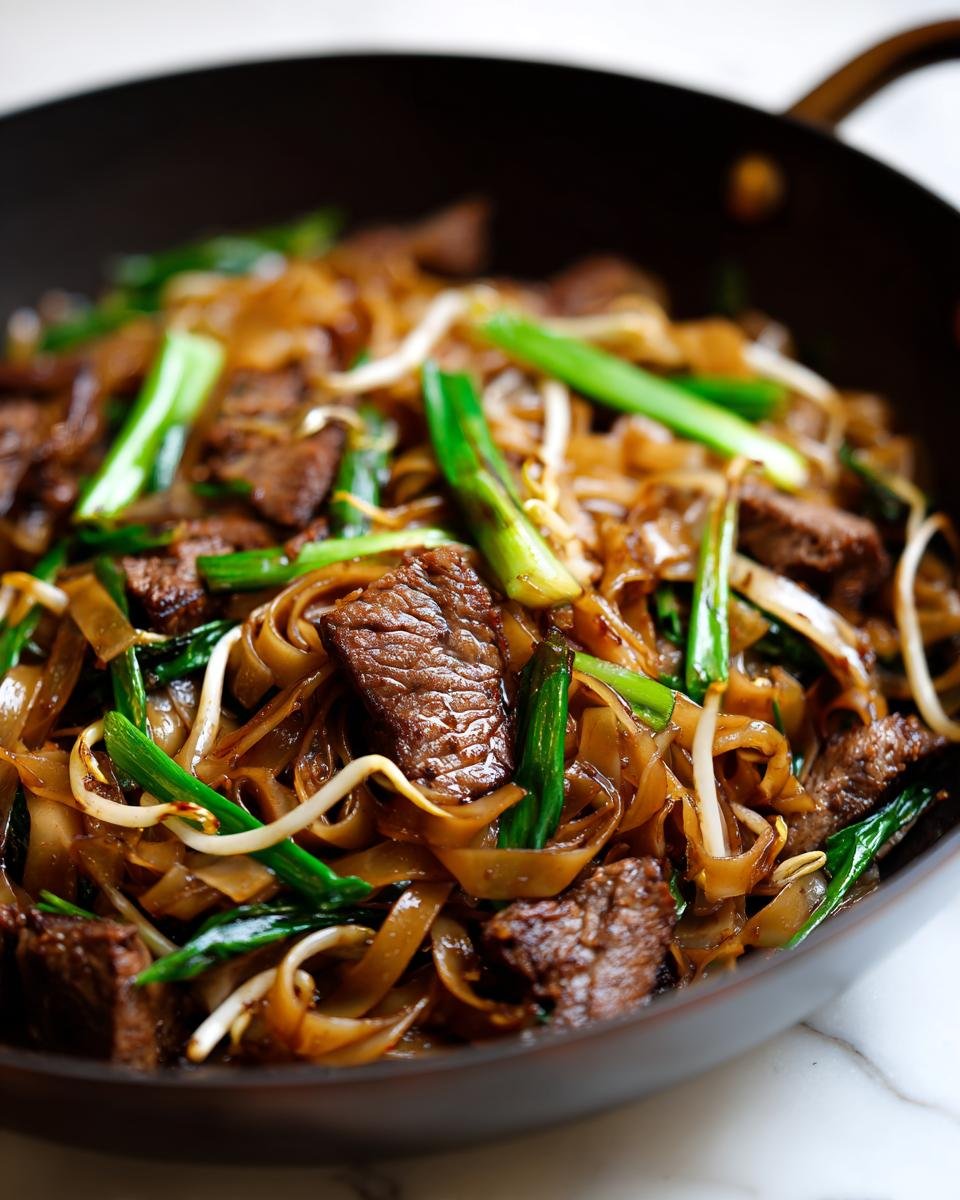
Time to heat up that wok until it’s practically smoking! Add your tablespoon of oil. Once it shimmers, throw in that marinated beef. You’re looking for a quick brown sear—maybe two or three minutes tops. As soon as it’s nicely browned, yank it right out and put it on a clean plate. We aren’t cooking it all the way now; we just want that initial color and flavor locked in. Next, drop the garlic and ginger straight into that hot, beefy-flavored oil. Stir them fast for about 30 seconds until you can really smell them, scrape up any brown bits, and then toss in the yellow onion, stirring for just one minute more.
Combining Noodles, Sauce, and Final Toss for Beef Chow Fun
Now comes the fun part! Dump those drained noodles right into the wok. Immediately drizzle everything over the top: the oyster sauce, the dark soy for color, and that teaspoon of sesame oil. Toss everything vigorously and quickly with tongs to make sure every single noodle gets coated evenly in that glorious sauce. Once the noodles look shiny, return the seared beef back into the pan. Toss in your bean sprouts and those chunky green onions. Give it one last terrific toss, maybe a minute or two, just until everything is hot through. Finish it off with a dash of white pepper and serve immediately. If you want more great stir-fry ideas, check out these irresistible beef stir-fry recipes!
Ingredient Substitutions for Your Beef Chow Fun
Look, I know getting authentic *ho fun* noodles can sometimes feel like a treasure hunt, especially if your local Asian market is closed. Don’t let that stop you from making this **Beef Chow Fun**! If the wide rice noodles are a no-go, you can totally use thicker Shanghai-style noodles or even good quality linguine in a pinch, but you’ll need to adjust that soaking time drastically. For the beef, flank steak is ideal because it sears nicely, but don’t stress if you only have sirloin or even thinly sliced skirt steak—they work just as well!
Also, if you are trying to keep this vegetarian or just ran out of oyster sauce (it happens!), you can swap it cup-for-cup with a thick mushroom-flavored soy sauce or vegetarian oyster sauce substitute. It gives you that deep umami without missing a beat. Cooking should be flexible, right? Just make sure whatever you substitute still has enough flavor to stand up to those noodles!
Serving Suggestions for Your Homemade Beef Chow Fun
So, you’ve nailed the smoky, savory perfection that is restaurant-quality **Beef Chow Fun**! Now what? You don’t want to just eat it standing over the counter like a ravenous beast—although I’ve certainly done that! This dish is robust enough to be a meal all on its own, but a true Cantonese spread always includes a few thoughtful extras to balance the richness.
My absolute favorite way to finish this is with a small dipping dish of chili oil mixed with a splash of good quality Chinese black vinegar. The vinegar cuts right through the richness of the beef and the sauce, giving you a bright, zingy contrast on every bite. Don’t be shy with an extra sprinkle of fresh green onion right before serving, either—the color wakes everything up!
If you’re serving this as part of a bigger family dinner, it pairs beautifully with something very light on the side, like a simple clear broth soup made with just cabbage and maybe some mushrooms. It cleanses the palate nicely between bites of the heavier noodles. And no need for fancy sides like garlic bread; that never makes sense with stir-fries! If you’re looking to incorporate more sauce mastery into your cooking repertoire, you should definitely check out my tips for an amazing homemade simple pasta sauce—it’s all about building layers of flavor, just like with these noodles!
Storing and Reheating Leftover Beef Chow Fun
The hardest part about making amazing **Beef Chow Fun** is usually stopping yourself from eating it all in one sitting! But if you manage to save some—maybe you were smart and doubled the recipe—you need to treat those leftovers right. The biggest enemy of leftover stir-fried noodles is clumping. Those gorgeous, slippery *ho fun* noodles decide they want to fuse into one giant, sticky mass the second they hit fridge temperature.
When you put leftovers away, make sure they are in a shallow container, not piled high in a deep bowl. This helps them cool down faster, which, weirdly, helps prevent that immediate super-clump when they go into the cold. Seal it up tight, and they should be good for about three days in the fridge.
Now for reheating, and this is crucial: do NOT, I repeat, *do not* blast this in the microwave. The microwave just steams the noodles, and you’ll end up with sad, gummy rice noodles that have lost all that wonderful texture we worked so hard for. The best way to resurrect your **Beef Chow Fun** is back in the wok or a good heavy skillet over medium-high heat.
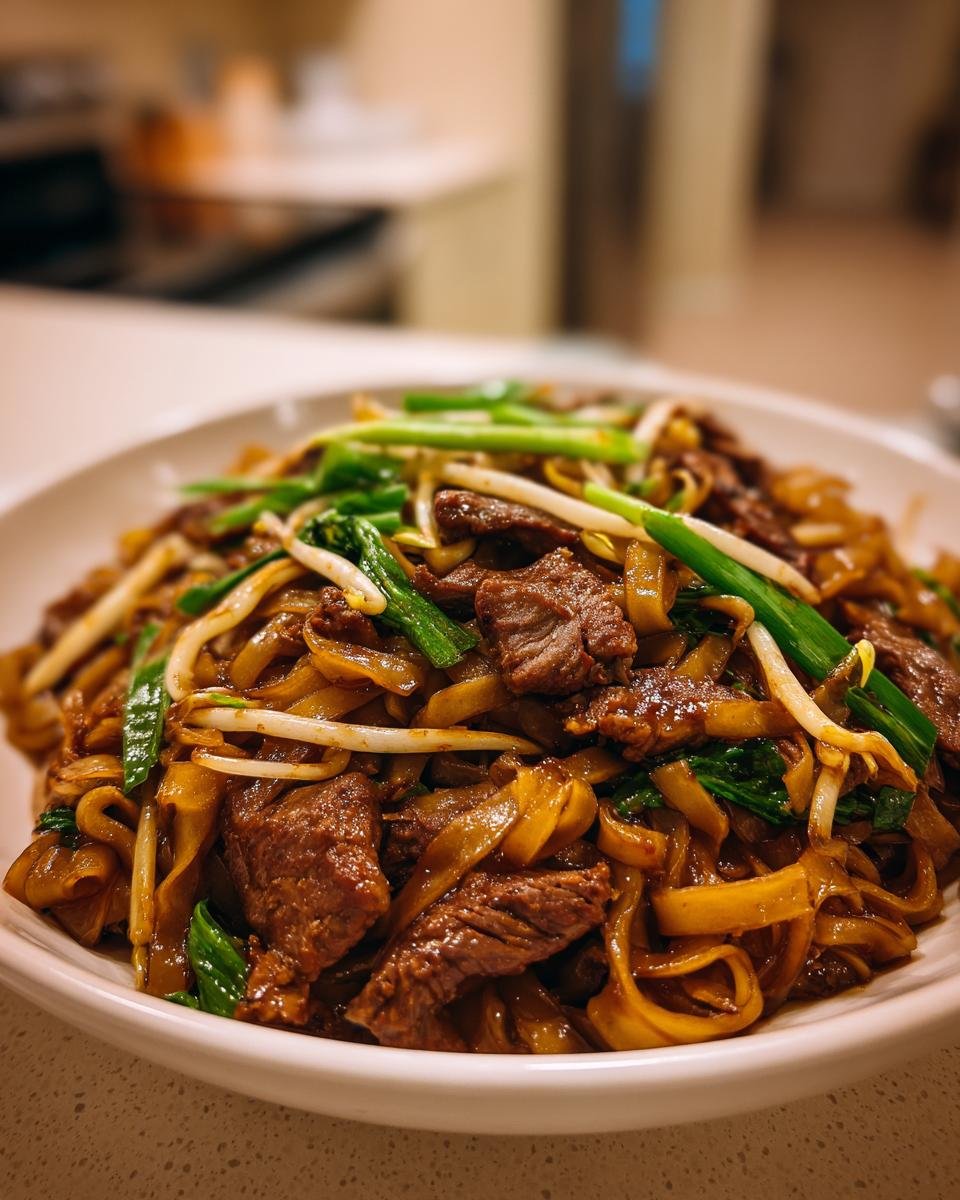
If they seem dry or stuck together when you pull them out, add just a tiny splash—maybe a teaspoon—of water or broth and let it steam off as you toss. This reintroduces a little humidity. Toss constantly, breaking up the clumps as you go. It takes maybe five minutes, and suddenly, they are piping hot, savory, and almost as good as fresh. You’ll be amazed it survived the night!
Frequently Asked Questions About Beef Chow Fun
I know when you’re trying a new recipe, especially one that relies on specific techniques like stir-frying, you’re going to have questions! It’s totally normal. I answer these all the time for my family when they try to replicate my **Beef Chow Fun** at home. Getting the small details right makes all the difference between a great noodle dish and a truly unforgettable one!
What is ‘wok hei’ and how do I get it in my Beef Chow Fun?
Ah, ‘wok hei’! This is the magic word in Cantonese cooking, and it literally translates to ‘the breath of the wok.’ It’s that subtle, delicious, slightly smoky char flavor you get when food hits metal that is screaming hot. You can’t fake it with liquid smoke, trust me. The only way to get true *wok hei* in your **Beef Chow Fun** is by making sure your wok is hotter than you think it should be before you add the oil, and then—this is key—don’t overcrowd the pan!
If you pile too much beef or noodles in at once, the temperature dips immediately, and everything starts steaming instead of searing. That’s why we cook the beef in small batches and remove it. Keep that heat high, and let the ingredient hit the hot metal directly to get that authentic, slightly charred taste we love.
Can I substitute flank steak in this Beef Chow Fun recipe?
Yes, absolutely! Flank steak is my top choice because it’s got a good grain structure that marinades absorb well, and it slices thinly easily. But if you only have skirt steak on hand, grab it! Skirt steak is super flavorful and cooks almost instantly, so it’s perfect for this dish. You could even use tenderloin if you’re feeling fancy, though that’s sometimes too lean for my taste in stir-fries.
The crucial part isn’t the exact cut; it’s the thickness. You need it thin—paper thin, almost! When you’re slicing, make sure you’re cutting across the muscle grain. If you slice *with* the grain, you’ll end up with little tough strips in your otherwise perfect **Beef Chow Fun**. A sharp knife is your best friend here!
Why are my rice noodles sticking together in the Beef Chow Fun?
If your *ho fun* noodles clump up into one giant, sad block, it’s almost always because of the water situation. They either weren’t drained well enough after soaking, or they sat out too long before hitting the wok. Remember, those noodles are starchy!
To prevent it, make sure you’re giving them a good, thorough drain—I like to let them sit in the colander for five minutes. Then, right before they go into the hot wok, give them that light toss with a teaspoon of plain oil, like I mentioned in the tips section. That light coating acts like a little shield, helping them slide beautifully against each other when you toss them with the sauce. Sticky noodles are the enemy of great stir-fry!
Nutritional Snapshot for This Beef Chow Fun
Now, I know we cook this **Beef Chow Fun** because it tastes absolutely amazing, not because we’re tracking every calorie, but it’s nice to have an idea of what you’re digging into, right? Since this is a homemade dish where we control the oil and the salt, it’s usually miles better than what you might get from a takeout spot. But remember, these numbers are just estimates based on the ingredients listed in the recipe, assuming we are dividing it evenly across four hearty servings.
If you are using a little extra oil for that gorgeous *wok hei* or adding extra oyster sauce, the sodium might tick up a bit. Cooking is fluid, and these figures should just be a ballpark guide. It’s a fantastic source of lean protein from the flank steak, and the noodles provide a solid carb base for energy!
- Serving Size: 1 serving
- Calories: Around 550
- Protein: A satisfying 35 grams
- Fat: Roughly 18 grams total (most of that is healthy-ish unsaturated fat!)
- Carbohydrates: About 65 grams, mainly from those wide rice noodles
- Sodium: This is the one to watch—around 950 mg, so try not to add too much extra salt at the table!
We’ve kept the sugar quite low, which is easy because the main flavor comes from savory elements like the oyster sauce and beef, not sweet glazes. Eat up, you deserve this authentic taste of Cantonese cooking!
Print
Beef Chow Fun
- Total Time: 30 min
- Yield: 4 servings 1x
- Diet: Low Lactose
Description
A Cantonese stir-fry dish featuring wide rice noodles, sliced beef, and bean sprouts.
Ingredients
- 1 pound wide rice noodles (ho fun)
- 1 pound flank steak, thinly sliced
- 2 tablespoons soy sauce
- 1 tablespoon cornstarch
- 1 tablespoon vegetable oil
- 2 cloves garlic, minced
- 1 inch ginger, minced
- 1 cup bean sprouts
- 1/2 cup sliced yellow onion
- 1/4 cup green onions, cut into 1-inch pieces
- 2 tablespoons oyster sauce
- 1 tablespoon dark soy sauce
- 1 teaspoon sesame oil
- 1/2 teaspoon white pepper
Instructions
- Soak the rice noodles in hot water according to package directions until pliable but still firm. Drain well and set aside.
- In a bowl, toss the sliced beef with soy sauce and cornstarch. Let it marinate for 10 minutes.
- Heat a wok or large skillet over high heat. Add vegetable oil.
- Add the marinated beef and stir-fry until browned, about 2-3 minutes. Remove the beef from the wok and set aside.
- Add garlic and ginger to the wok and stir-fry for 30 seconds until fragrant.
- Add the yellow onion and stir-fry for 1 minute.
- Add the drained noodles to the wok. Pour in oyster sauce, dark soy sauce, and sesame oil. Toss everything together quickly to coat the noodles evenly.
- Return the beef to the wok. Add bean sprouts and green onions. Toss for another 1-2 minutes until heated through.
- Stir in white pepper. Serve immediately.
Notes
- If your noodles stick together, you can lightly toss them with a teaspoon of oil before stir-frying.
- Use a very hot wok to achieve the characteristic smoky flavor (wok hei).
- Prep Time: 20 min
- Cook Time: 10 min
- Category: Dinner
- Method: Stir-Frying
- Cuisine: Chinese
Nutrition
- Serving Size: 1 serving
- Calories: 550
- Sugar: 8
- Sodium: 950
- Fat: 18
- Saturated Fat: 4
- Unsaturated Fat: 14
- Trans Fat: 0
- Carbohydrates: 65
- Fiber: 3
- Protein: 35
- Cholesterol: 85
Keywords: Beef Chow Fun, ho fun, stir-fried noodles, Cantonese beef, rice noodles