
Oh, the holidays! There’s just nothing like the smell of sugar and spices filling the kitchen when the weather outside gets chilly. You know me, I love a dessert that really makes a statement, and forget sad sheet cakes—when Christmas rolls around, we’re going straight to the classics. I’m talking about the showstopper, the one that makes everyone stop talking mid-sentence when you bring it out: the Bûche de Noël!
Making a traditional rolled cake, or Yule Log, sounds super intimidating, right? People look at these gorgeous logs, covered in chocolate bark, and think it’s a job only for professional French pastry chefs. Trust me, after a few attempts, I figured out the easy parts and the fiddly bits. This recipe is my go-to version for the perfect Bûche de Noël that truly earns its spot as the king of **French Christmas Desserts**. We’re going to tackle the sponge and the ganache together, and I promise, you’ve totally got this!
Why This Bûche de Noël is the Ultimate French Christmas Desserts Centerpiece
This cake isn’t just dessert; it’s an experience! When you get the technique right, this Bûche de Noël captures the spirit of incredible **French Christmas Desserts** perfectly. We focus on three things that make ours stand out. That key, non-cracking roll is all thanks to the towel trick, which beats any store-bought flour mix, even a good one like the one for homemade cake flour.

- It has that authentic, light-yet-tender sponge texture that rolls beautifully.
- The deep, dark chocolate ganache finish is unbelievably rich.
- Our hot-cake-in-towel method ensures you get a snug roll without those massive, depressing cracks!
It just looks like the holidays on a platter, and honestly, baking it makes me feel like I’ve actually accomplished something major in the kitchen.
Gathering Your Ingredients for Classic French Christmas Desserts
Okay, the prep is half the battle when you’re aiming for a showstopper like this Bûche de Noël. We need to make sure we have all our starring players ready to go before we even think about turning on the oven. Seriously, don’t substitute the heavy cream for anything less if you want that gorgeous, stiff whipped filling. That’s what gives the log its interior structure!
I’ve listed everything you need below. Remember what I said about quality chocolate? Get the good stuff for that ganache—it’s worth the splurge! If you’re a total coffee fiend like my uncle, feel free to swap out the vanilla in the filling for a teaspoon of strong coffee extract; that mocha twist is fantastic with the dark chocolate coating. For the best results with the filling, check out my notes on making the perfect chocolate whipped cream.
- 4 large eggs (make sure these are room temperature, it really helps them whip up!)
- 1/2 cup granulated sugar
- 1/2 cup all-purpose flour
- 1/4 cup unsweetened cocoa powder
- 1 teaspoon vanilla extract (for the sponge)
- 1/4 cup butter, melted (and cooled slightly before using in the batter!)
- 1 cup heavy cream (cold, for the filling)
- 1/2 cup powdered sugar (for the filling)
- 1 teaspoon vanilla extract (for the filling)
- 4 ounces dark chocolate, finely chopped (for the ganache)
- 1/4 cup heavy cream (just a tiny bit for melting the chocolate)
- Powdered sugar for that final, snowy dusting
That’s the checklist! Having these measured out makes the actual baking process go surprisingly quickly. It’s all about rhythm once you dive in.
Step-by-Step Instructions for Your Bûche de Noël
Gosh, this is where the real fun starts! Follow these steps closely, especially around the timing of the roll, and you’ll have a beautiful, perfectly shaped log. Don’t panic if you see a tiny fissure when you unroll it later—we’re covering it completely in chocolate bark! No one will ever know. If you’ve ever had issues with dense cakes, remember that gentle folding is key here, much like when you’re being careful with a recipe that calls for homemade cake flour, like the one for cake flour substitute. We want maximum air!
Baking the Perfect Sponge Base for French Christmas Desserts
This base needs to be light enough to roll without shattering, which means speed is important once it hits the oven! First, get that oven fired up to 375°F (190°C). You need a 15×10 inch jelly roll pan ready, greased, and lined completely with parchment paper. That paper is your best friend—don’t skip it!
Now for the eggs and sugar. Beat them until they are super pale, thick, and fluffy. This traps the air! Gently sift your dry stuff—the flour and cocoa—and fold it in slowly. I mean slowly! You don’t want to knock out all that volume you just created. Right at the end, just fold in that ¼ cup of melted butter. Pour that gorgeous batter into your pan and spread it thin and even. Bake it for just 10 to 12 minutes. Seriously, watch it closely; it cooks fast! When a toothpick comes out clean, it’s done.
The Crucial Rolling Technique for Your Bûche de Noël
This step is the make-or-break moment for an intact Bûche de Noël, but I swear it’s easy if you just go with it. While your cake is baking, grab a clean kitchen towel—a thin, cotton one works best—and dust the entire surface liberally with powdered sugar. This prevents sticking!
As soon as that cake comes out of the oven, flip it immediately onto that sugared towel. Peel the parchment paper off its back—yes, it’s hot, use mitts! Now, starting from one of the short ends, you have to roll the cake *and* the towel together, tightly. It will feel like a sausage! You must let it cool completely like this; the towel sets the shape for you. If you try to unroll it while warm, it’ll crack for sure. This hot-roll trick is the secret French bakers use to keep things smooth.
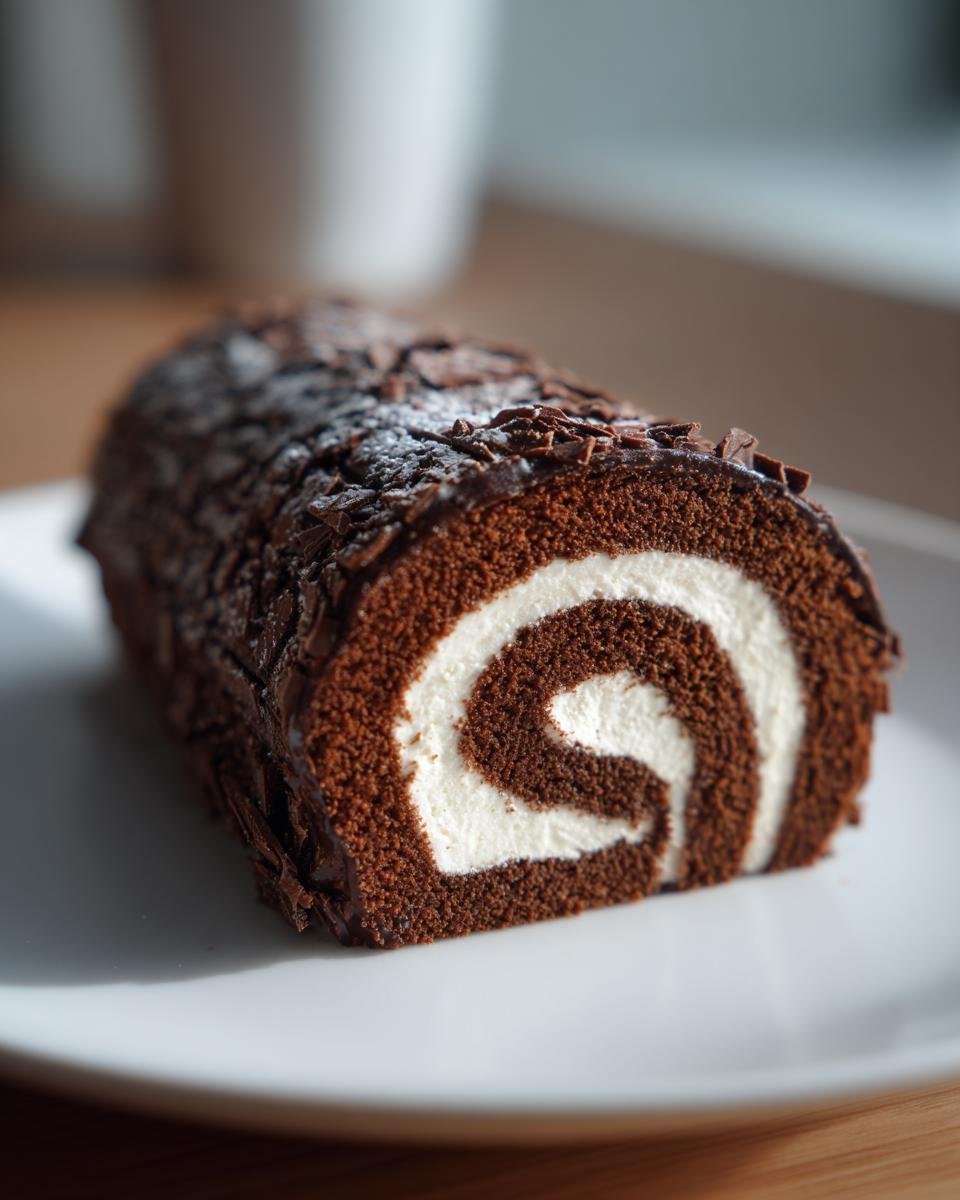
Assembling the Filling and Final Decoration of Your French Christmas Desserts
Once the cake is totally cool, unroll it carefully. Time to make that filling! Whip your heavy cream, powdered sugar, and vanilla until you get stiff peaks—it should hold its shape like a little mountain. See how easily that comes together? Spread that glorious whipped cream evenly over the sponge. Be generous, but leave about an inch border clear along one of the long edges so it doesn’t all squeeze out.
Roll the cake back up again, but this time, leave the towel behind! Roll it snugly and place it seam-side down right onto your serving platter. Now for the showstopper: the ganache! Heat that final ¼ cup of cream until it’s just simmering, pour it over your chopped dark chocolate, let it sit for five minutes, and then stir until it’s that glossy, perfect chocolate river. Slather that ganache all over the log. Here’s the visual trick: Use the tines of a fork or the edge of an offset spatula to skim across the top, creating rough, uneven lines that look exactly like wood bark. Remember, any little spot where the cake cracked? The chocolate poke cake style texture from the ganache covers it instantly! Pop the whole thing in the fridge for at least an hour to set up before you dust it heavily with powdered sugar for that snowy effect.
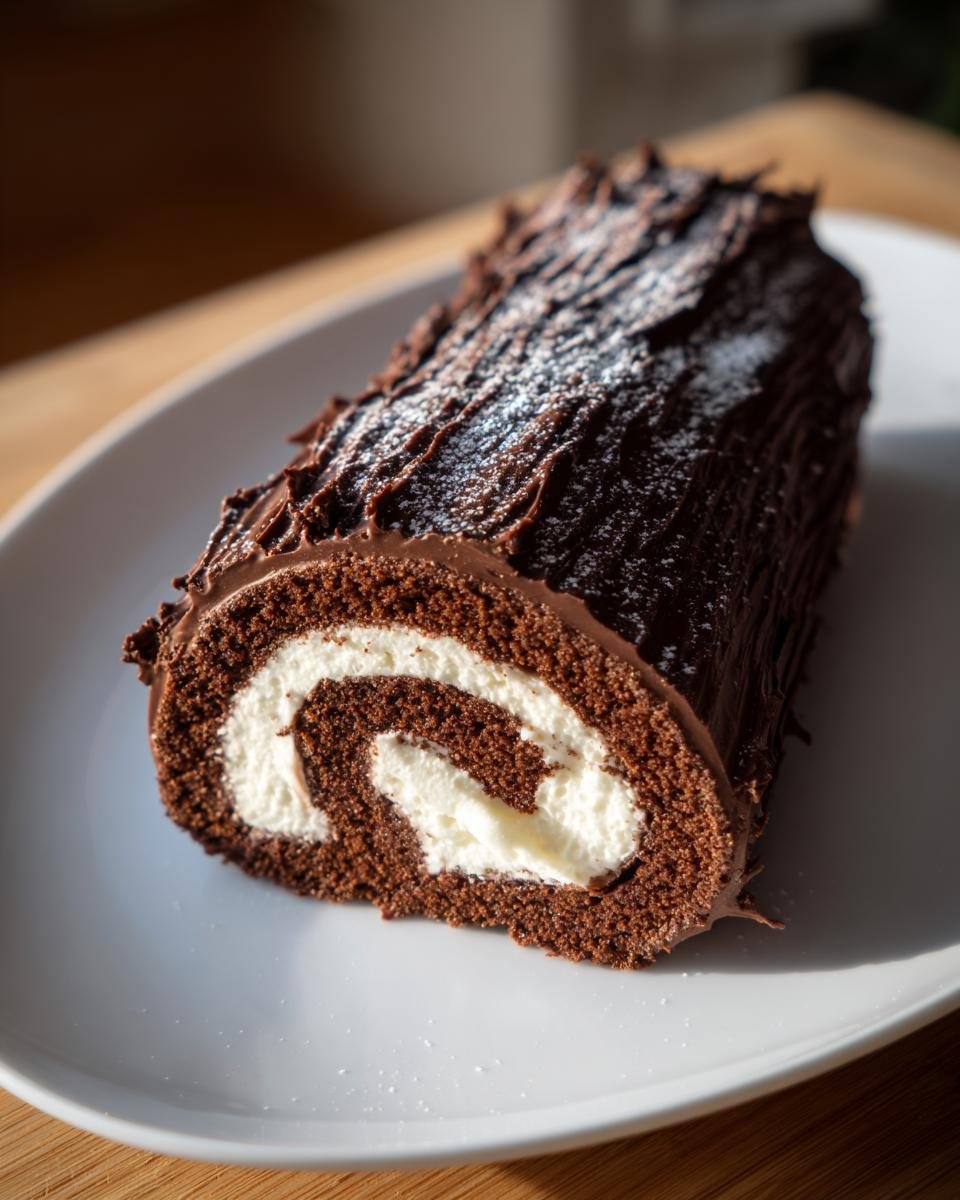
Tips for Success When Making French Christmas Desserts
Mastering any Bûche de Noël takes a little finesse, but these small pointers will make your log look and taste like it came straight from a Parisian salon. Don’t stress about perfection; these tips help bridge the gap between home baker and pastry artist! Remember, if you’re ever worried about dense cakes, sometimes using a perfect homemade cake flour blend, like the one discussed here for German marble cake recipes, helps keep things light, though our sponge recipe is usually pretty forgiving.
Here’s what I’ve learned over the years of trying to create the best **French Christmas Desserts** for my annual party:
- Temperature Control is Everything: Make sure those eggs are truly room temperature when you whip them for the sponge—this maximizes volume. On the flip side, your heavy cream *must* be ice cold for the filling to whip up into stiff peaks properly. There’s no cheating that rule!
- Don’t Overbake the Sponge: I cannot stress this enough. That thin sheet cake only needs 10-12 minutes. If it gets even a hint crispy, it *will* crack when you try to roll it. Pull it out the second that toothpick comes out clean.
- Ganache Consistency Check: If your ganache feels too stiff when you go to spread it, don’t try to rush it in the microwave! Just put the bowl over a pot of very hot (but not boiling) water for just 30 seconds, stirring constantly. You want spreadable velvet, not something you have to chisel onto the cake.
- Creating the Branches: Once the ganache is spread and you’re ready for the final look, grab a sharp serrated knife. Use the tip or the side of the knife to gently score the sides and top in horizontal lines for the bark effect. To make the ‘cut branch’ ends, take that serrated knife and slice the cake ends at a sharp diagonal angle. It instantly upgrades the whole presentation!
Following these tricks takes the guesswork out of replicating authentic **Bûche de Noël** presentation.
Variations on the Classic Bûche de Noël
I absolutely adore tradition, and this classic chocolate version is perfection every Christmas. But listen, once you nail the basic sponge technique—which you totally will thanks to the rolling trick—you can start having fun! It’s easy to swap out elements to keep things interesting year after year without losing that signature log shape that makes it such a fantastic centerpiece among **French Christmas Desserts**.
The sponge itself is so neutral that it takes on any flavor you throw at it! Think of it like a blank canvas coated in chocolate. If you’re feeling bold, swap out the vanilla extract in the filling for something a little different. Instead of coffee, which is tasty, try using peppermint extract—just a half teaspoon is plenty! You end up with a glorious chocolate-peppermint log that feels extra festive.
Another easy change is playing with the chocolate caliber. The recipe calls for dark chocolate for the ganache, and I love that intense flavor, but try switching it up sometimes. Maybe use a high-quality milk chocolate for a sweeter coating, or go totally dramatic by using white chocolate for the bark effect. If you use white chocolate, you’ll want to add a tiny drop of brown food coloring or a touch of cocoa powder to the melted white chocolate just to mimic that dark bark color, or it will look wonderfully ghostly and white!
For a richer, moister sponge base, you can even look at recipes like the one for chocolate olive oil cake and see if you can incorporate a small amount of olive oil alongside the melted butter in our sponge batter. I haven’t experimented with going fully olive oil yet, but every little bit of healthy fat keeps our Log tender! Just remember, keep the rolling technique the same, no matter what flavor you dream up!
Serving Suggestions for Your Bûche de Noël
Once you’ve gone through all that work to create a masterpiece, you want it to shine on the table! A Bûche de Noël is heavy, rich, and so deeply chocolatey, so you need drinks that can either cut through that richness or complement it perfectly, especially since it’s one of the best **French Christmas Desserts** out there.
Forget watery drinks! You need something with a little punch. My absolute favorite pairing, especially when we have guests bundled up inside, is a hot, spiced wine. You know, Vin Chaud! The cinnamon and clove in the wine just sing when they meet the dark chocolate ganache. It’s pure holiday magic, and it smells just as good as the cake baking.
If you’re serving this after a big, heavy holiday meal, you might want something to balance the sweetness. A strong, slightly bitter coffee is perfect. If you want to make that coffee idea even fancier, I often whip up a small side bowl of coffee-flavored whipped cream to layer on top instead of just the powdered sugar. It adds this beautiful mocha depth. You can find my simple method if you need a boost with simple coffee whipped cream.
Presentation-wise, keep it simple. We’ve already done the heavy lifting making it look like a log! I usually spread the remaining powdered sugar lightly over the platter *around* the log, making it look like freshly fallen snow overnight. A few strategically placed sugared cranberries or even some hardy rosemary sprigs tucked near the “branches” give it that final, rustic, enchanted forest look. Honestly, though, nothing beats stepping back and just admiring that chocolate bark before you slice into it!
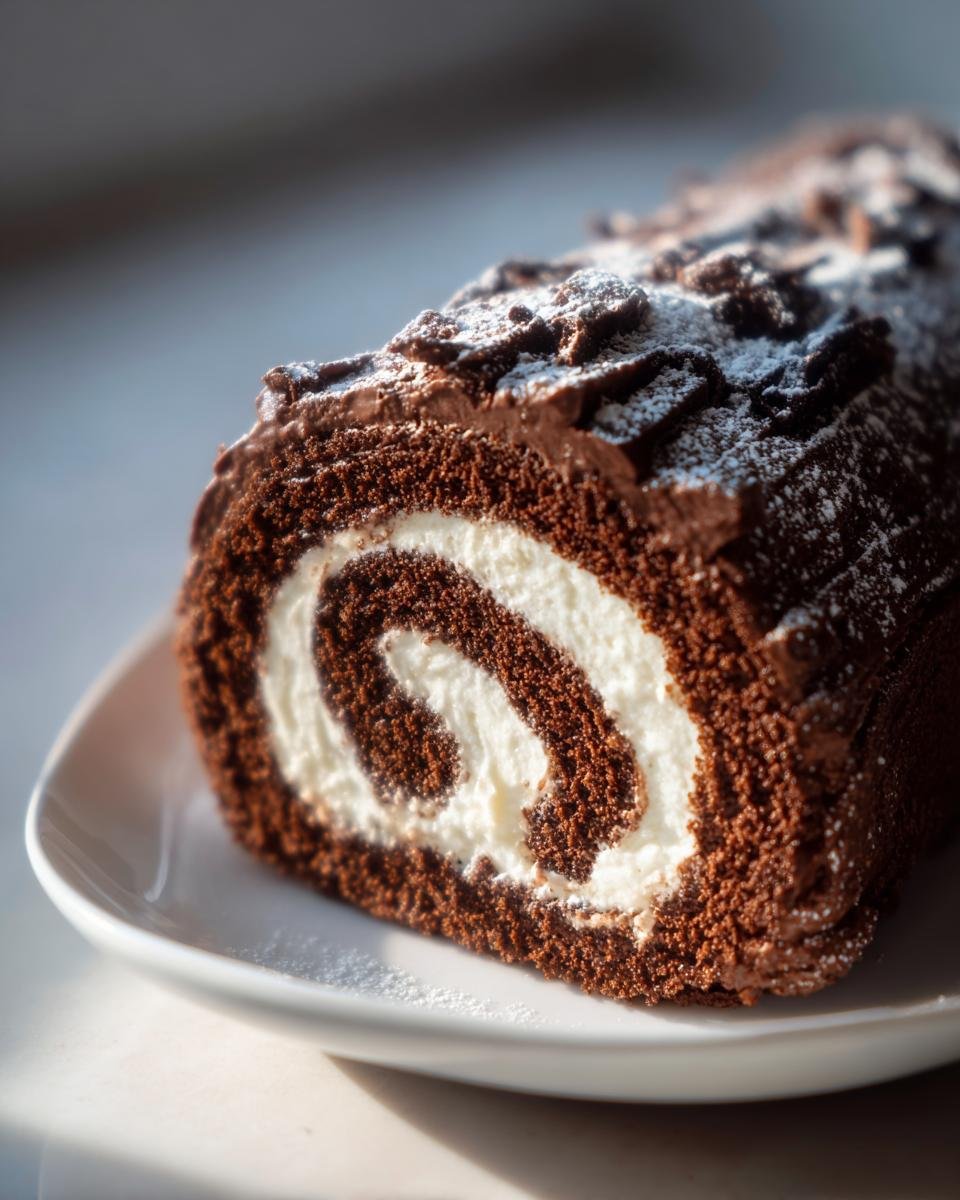
Storage and Reheating Instructions for This French Christmas Desserts Recipe
Alright, so you’ve made the most stunning Bûche de Noël, and the party is over, but you have leftovers! Since this is a rich cake filled with actual whipped cream, we have to be a little careful about how we store it. It’s not like a simple pound cake that can sit happily on the counter for a day or two. Nope, this one needs the chill treatment to keep that beautiful cream feeling firm and fresh.
The good news is that because the ganache acts like a fantastic seal over the sponge, it really locks in the moisture. It keeps remarkably well, provided you keep it cold. We keep ours covered tightly in the fridge, and I find it tastes best within three to four days. After that, the sponge starts to get a little bit too damp from the cream, even with that lovely chocolate seal.
When you store it, try to keep it covered lightly with plastic wrap, but don’t press the wrap directly onto the chocolate bark—it will stick and ruin your hard work! I usually drape it loosely over the top. If you have a cake dome, that’s perfect for keeping the air circulation down while protecting the frosting.
Now, the big question: Can you freeze it? Technically, yes, but I usually don’t bother. The whipped cream filling doesn’t freeze and thaw quite as beautifully as the sponge does. If you absolutely must freeze it—say you made it a week before Christmas—make sure you freeze it without the final dusting of powdered sugar. You can wrap the entire, fully frosted log tightly in plastic wrap, then a layer of foil, and freeze it for up to a month. When you thaw it overnight in the fridge, wait until it’s completely thawed before dusting it with that final snowfall of powdered sugar!
Speaking of serving, if the cake is rock-hard from the fridge, pull slices out about 20 minutes before you plan to eat them. That slight warming is just enough to bring the texture of the sponge back to life without making the cream soupy. Enjoy those leftovers, because every slice of this Bûche de Noël is a little taste of Christmas morning!
Frequently Asked Questions About Making French Christmas Desserts
I know you’ve got questions, because when I first tackled the Bûche de Noël, my notebook was filled with crossed-out ideas and panicked scribbles! It’s a showstopper dessert, so it’s natural to want everything perfect. Don’t worry, these are the exact things I had to figure out on my own. We want your **French Christmas Desserts** experience to be smooth, fun, and delicious!
If you need inspiration for side snacks while you wait for the chill time, I’ve tried making these amazing homemade treats inspired by homemade tagalong cookies, but honestly, nothing beats the satisfaction of this French Log!
Can I make the sponge cake for this French Christmas Desserts recipe ahead of time?
This is a totally fair question, especially when holiday schedules get crazy! You can absolutely make the sponge cake part ahead of time, which I sometimes do just to spread out the work. Bake that jelly roll layer as directed, and once it’s cooled completely, I carefully wrap it TIGHTLY in plastic wrap—like, totally sealed. You can leave it at room temperature for about 24 hours before you plan to fill it. If you need to keep it longer, chill it in the fridge, but make sure it’s still wrapped up well so it doesn’t dry out. Don’t try making it more than two days out, though; that fresh-from-the-oven quality is what helps maintain that perfect rolling ability!
What is the best way to get that authentic bark look on the Bûche de Noël?
People think this takes fancy tools, but it really doesn’t! Once you have that luscious, smooth ganache spread all over your chilled Bûche de Noël, grab an offset spatula or even the back of a sturdy dinner fork. Hold your tool at a very shallow angle—almost parallel to the cake—and gently drag it across the chocolate in short, slightly messy strokes. Don’t try to make perfect lines! The goal is textured ridges and valleys. I like to make the strokes run horizontally around the log to mimic the rings of a tree. That uneven, rustic texture is exactly what makes it look like real tree bark. You’ll be amazed how professional it looks!
My cake cracked when I unrolled it; is the Bûche de Noël ruined?
Oh, honey, NO! If you made it this far, you are absolutely not ruined! Cracking happens to the best of us, usually because we waited five minutes too long before rolling it in the towel, or maybe the oven was just a hair too hot. The very best part about this specific recipe for **Bûche de Noël** is how forgiving the final ganache layer is.
Here’s what you do: Unroll it gently, spread your filling, and then reroll it snugly. Place that cracked log seam-side down. Now, cover *every single visible crack* with loads of that rich chocolate ganache. When you go in with your tines or spatula to create the bark texture, those cracks instantly become interesting lines in the ‘wood grain.’ I promise you, once it’s dusted with powdered sugar, no one will ever be the wiser. It’s just part of its charming, rustic character!
Nutritional Estimates for Your Bûche de Noël
Okay, let’s talk numbers, though I always say the best part of a holiday treat isn’t the math!
Since this Bûche de Noël is made with rich cream, dark chocolate, and butter, it’s certainly a decadence worth enjoying this time of year. We aren’t aiming for ‘low-calorie’ here; we are aiming for ‘delicious,’ and this recipe delivers! If you’re looking for lighter ideas elsewhere, I sometimes browse suggestions like those found in low-calorie meal ideas, but for Christmas, this Log is non-negotiable!
These figures are based on ingredient averages and an estimated 10 generous slices. Just remember, the quality of your heavy cream and the percentage of cocoa solids in your dark chocolate can shift these numbers a little. Treat this as a wonderful guide, not a strict rule book!
- Serving Size: 1 slice
- Calories: 350
- Sugar: 30g
- Sodium: 50mg
- Fat: 20g
- Saturated Fat: 12g
- Unsaturated Fat: 8g
- Trans Fat: 0g
- Carbohydrates: 38g
- Fiber: 2g
- Protein: 6g
- Cholesterol: 150mg
See? Worth every single bite! It’s a dense, rich piece of holiday magic, and knowing that you whipped that cream and tempered that chocolate yourself makes it taste even sweeter.
Print
Classic Bûche de Noël (Yule Log)
- Total Time: 57 min
- Yield: 10 servings 1x
- Diet: Vegetarian
Description
A traditional French rolled sponge cake decorated to look like a log, typically served during Christmas.
Ingredients
- 4 large eggs
- 1/2 cup granulated sugar
- 1/2 cup all-purpose flour
- 1/4 cup unsweetened cocoa powder
- 1 teaspoon vanilla extract
- 1/4 cup butter, melted (for cake)
- 1 cup heavy cream
- 1/2 cup powdered sugar
- 1 teaspoon vanilla extract (for filling)
- 4 ounces dark chocolate, chopped (for ganache)
- 1/4 cup heavy cream (for ganache)
- Powdered sugar for dusting
Instructions
- Preheat your oven to 375°F (190°C). Grease and line a 15×10 inch jelly roll pan with parchment paper.
- In a bowl, beat the eggs and granulated sugar until pale and thick. Beat in the vanilla extract.
- Sift the flour and cocoa powder together. Gently fold the dry ingredients into the egg mixture. Fold in the melted butter.
- Pour the batter into the prepared pan and spread evenly. Bake for 10 to 12 minutes, or until a toothpick inserted comes out clean.
- While the cake bakes, place a clean kitchen towel on your counter and dust it generously with powdered sugar.
- Immediately invert the hot cake onto the sugared towel. Peel off the parchment paper. Starting from a short end, roll the cake and towel together tightly. Let it cool completely in this rolled shape.
- For the filling, whip the heavy cream, powdered sugar, and vanilla until stiff peaks form.
- Once cool, carefully unroll the cake. Spread the whipped cream filling evenly over the cake, leaving a small border on one long edge.
- Reroll the cake without the towel, rolling it snugly. Place the seam-side down on a serving platter.
- For the ganache, heat the 1/4 cup heavy cream until simmering. Pour it over the chopped chocolate and let it sit for 5 minutes, then stir until smooth.
- Use an offset spatula to spread the ganache over the top and sides of the rolled cake, creating bark-like texture with the spatula tines.
- Chill the cake for at least 1 hour before serving. Dust with powdered sugar before slicing.
Notes
- You can substitute coffee extract for vanilla extract in the filling for a mocha flavor.
- If the cake cracks when you unroll it, do not worry; the ganache will cover any imperfections.
- Use a serrated knife to slice the ends at an angle to mimic cut branches.
- Prep Time: 45 min
- Cook Time: 12 min
- Category: Dessert
- Method: Baking
- Cuisine: French
Nutrition
- Serving Size: 1 slice
- Calories: 350
- Sugar: 30
- Sodium: 50
- Fat: 20
- Saturated Fat: 12
- Unsaturated Fat: 8
- Trans Fat: 0
- Carbohydrates: 38
- Fiber: 2
- Protein: 6
- Cholesterol: 150
Keywords: Bûche de Noël, Yule Log, French Christmas dessert, chocolate roll cake, sponge cake