
Oh, my friend, when I talk about comfort food that sings, I’m talking about something golden, crispy, and unbelievably tender. Forget everything you think you know about breaded cutlets! This recipe for authentic Wiener Schnitzel is the one you need in your life. It’s simple stuff, but the technique is everything. I remember the first time I nailed that light, puffed-up breading—it looked like a little cloud hugging the veal! It truly transformed my perception of schnitzel. Trust me, once you pound that veal thin enough and hear that perfect sizzle in the hot fat, you’ll be hooked forever.
Why This Wiener Schnitzel Recipe Delivers Authentic Flavor
A great Wiener Schnitzel isn’t just about throwing meat in breadcrumbs; it’s about physics and tradition! The reason this recipe stands head and shoulders above the rest comes down to two non-negotiables. First, you have to pound that veal thin—I mean paper-thin—so it cooks fast and stays tender.
Second, we need the right fat. We’re using clarified butter because it has a higher smoke point than regular butter, giving us incredible flavor without burning everything.
- Perfectly pounded veal cutlets (about 1/8 inch thick!).
- Hot fat that’s just right—not smoking, but shimmering!
- Using very fine breadcrumbs gives the best crust texture.
The Secret to Puffy, Golden Wiener Schnitzel Breading
This is the real insider tip that separates the pros from everyone else! When you put those breadcrumbs on, you must just gently dust them on. Don’t smash them into the meat, please! If you press too hard, the coating seals against the veal and can’t puff up when it hits the oil.
Also, once the schnitzel is frying, you need to gently shake the pan, almost like you’re rocking a baby. This movement makes the hot fat wash up over the edges of the crust. That little bit of washing action is what creates those gorgeous, wavy, light bubbles we call the soufflé effect. It’s beautiful!

Essential Ingredients for Perfect Wiener Schnitzel
Okay, let’s talk supplies. You can’t make magic out of mediocre stuff, right? For a truly classic Wiener Schnitzel, we need four main components: the veal, the coating, and the fat. We aren’t just grabbing anything off the shelf here; the quality really shows when you fry it thin like this.
You’ll need four cutlets, thin ones! We’re using 1/2 cup of simple flour, two big eggs, and 1 1/2 cups of breadcrumbs. Now, about those crumbs—I insist on very fine breadcrumbs, not the chunky Panko kind. The fine crumbs help build that delicate, uniform crust we’re aiming for. And for frying? Clarified butter is my absolute winner for flavor, but if you can’t find it, use a high-heat oil.
Ingredient Notes and Substitutions for Wiener Schnitzel
My recipe calls for veal because that’s tradition, but I know veal isn’t always easy to find! If you use pork loin cutlets instead, just know you’ve made Schweineschnitzel—still delicious, but technically different. If you use pork, pound it just as thin, aiming for that 1/8-inch thickness we talked about.
Don’t skip the seasoning! A good pinch of salt and pepper goes on *before* the flour. Also, the eggs need to be whisked really well until they are uniform so they coat everything perfectly. Remember, we want that beautiful thinness that only good pounding can achieve. Don’t cheat on that prep work!
Step-by-Step Instructions for Traditional Wiener Schnitzel
Now for the fun part—putting it all together! Achieving that classic Wiener Schnitzel takes following the steps precisely, especially when it comes to preparation. Once you get into the rhythm of the breading process, it actually moves really fast. Just make sure your skillet is nice and roomy!
When you’re frying, it’s tempting to crowd the pan to save time, but don’t do it, seriously. Overcrowding drops the temperature of the oil too fast, and then you end up with soggy schnitzel which is the saddest thing! Cook these in small batches so they can really swim happily in that hot fat. If you follow this batch rule, your crispness integrity stays totally intact. If you need a refresher on other fried meats, check out my tips for fried pork chops recipes, though the Wiener Schnitzel approach is unique!
Preparing the Veal Cutlets for Wiener Schnitzel
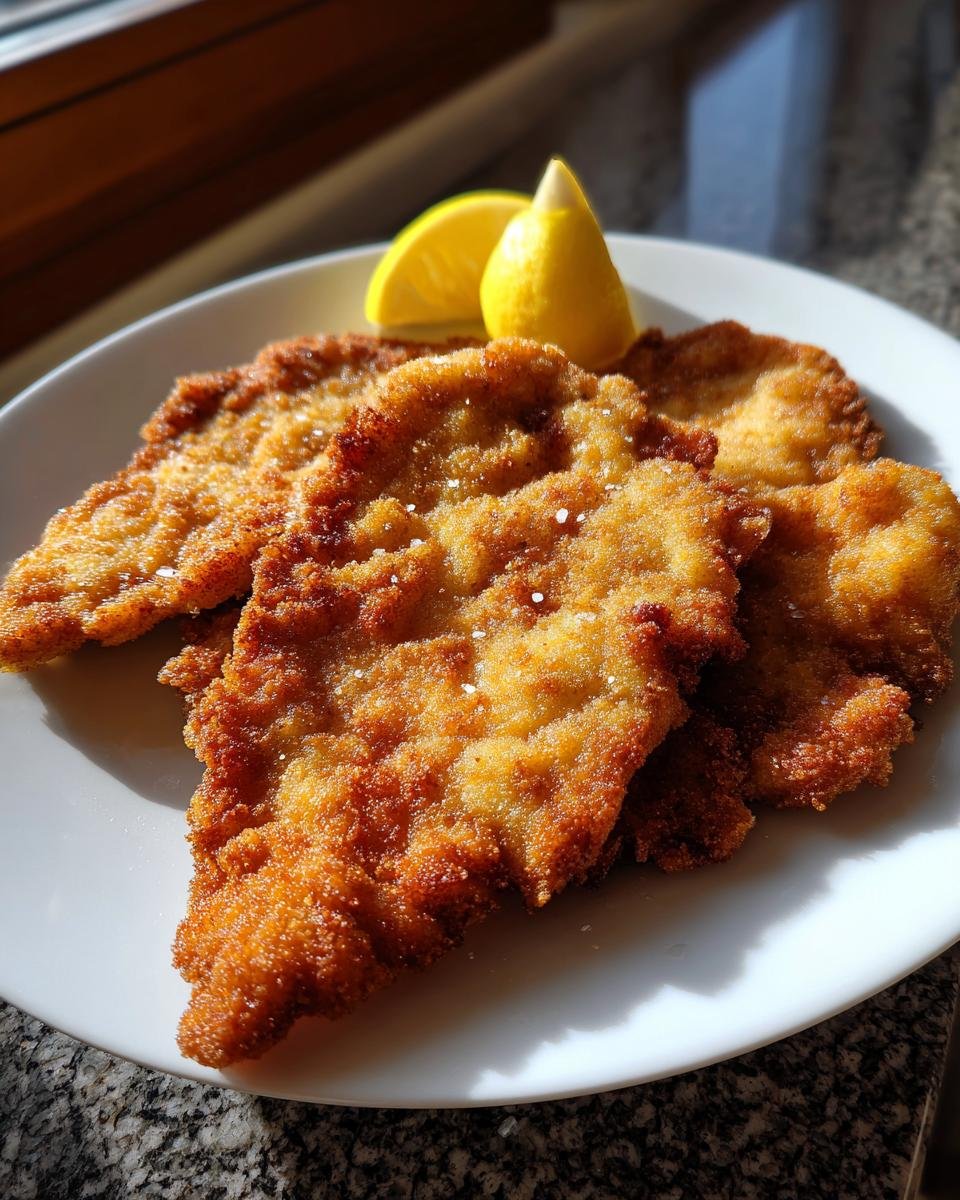
This is where the muscle comes in, my friend! Take those veal cutlets and sandwich them between two sheets of plastic wrap, see? Then, grab your mallet and start pounding. You need to hit them evenly until they are about 1/8 of an inch thin. It takes patience, but this thinning process is the non-negotiable secret to a schnitzel that cooks quickly and melts in your mouth.
Mastering the Breading Station for Wiener Schnitzel
Set up your stations: flour first, then the beaten egg, and finally the breadcrumbs. We do three dips! Dredge the meat in flour and shake off the excess—we just want a light dust. Dip into the egg wash, let it drip. Then, gently lay it into the breadcrumbs. Remember what I said: just lightly press them on so they stick, but don’t forcefully pack them in. Sealing them too tight keeps them from puffing!
The Frying Technique for Golden Wiener Schnitzel
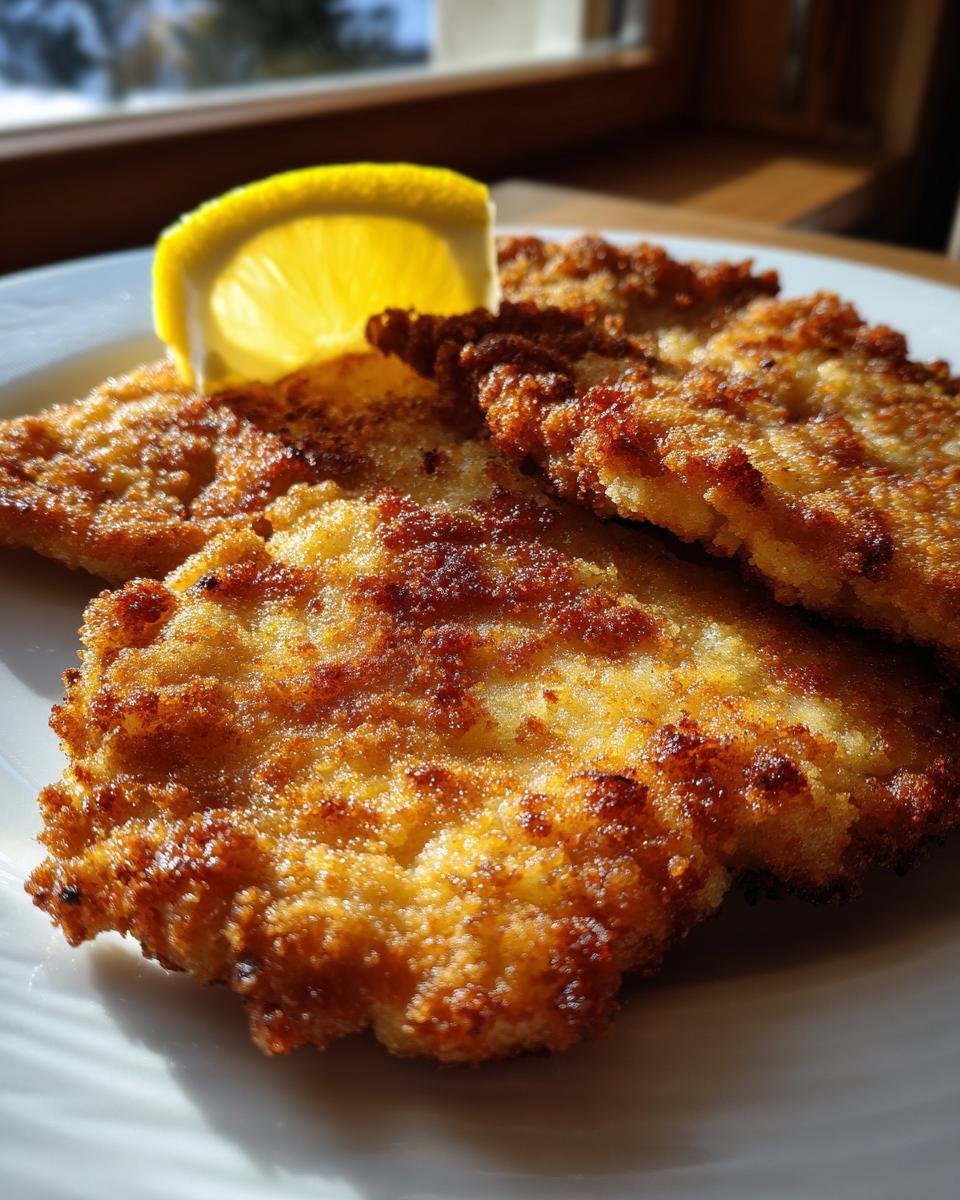
Get your clarified butter heated over medium-high heat—you want it hot enough that a stray crumb sizzles immediately, but not so hot it’s smoking like crazy. Gently slide your delicate cutlets in. Only 2 or 3 minutes per side! As they cook, you absolutely must shake that pan gently back and forth. This encourages the breading to lift and wave beautifully above the meat. When they are that perfect golden brown, lift them out fast and drain them well on a rack!
Serving Suggestions for Classic Wiener Schnitzel
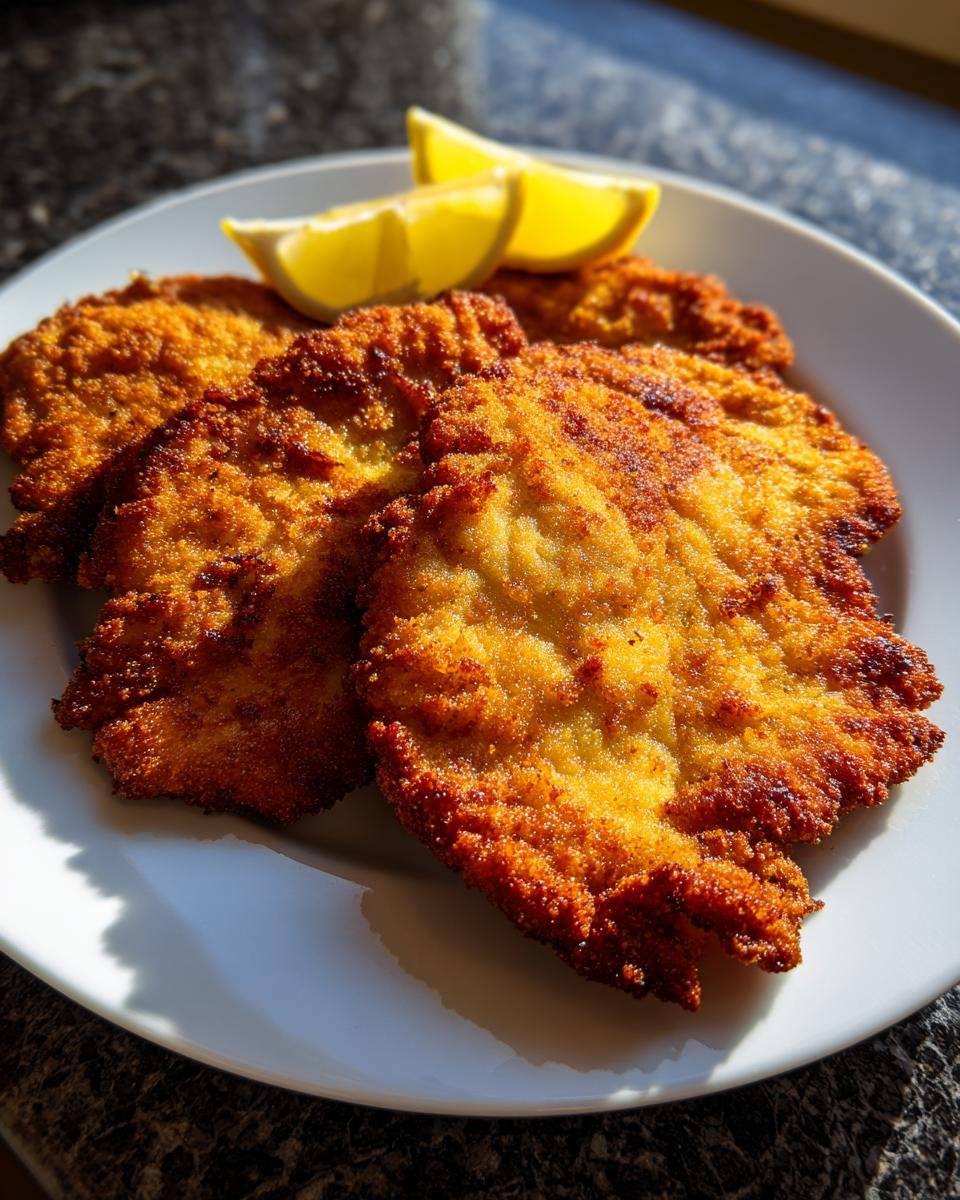
You can’t just eat a perfect Wiener Schnitzel naked, right? It needs its friends on the plate! In Austria, the rule is simple: keep it fresh and slightly acidic to cut through that beautiful fried richness. The absolute classic side is parsley potatoes—simple boiled potatoes tossed quickly with fresh parsley and butter. They are so easy, and they let the schnitzel shine.
If you want something tangy, a simple cucumber salad works wonders. And don’t forget the garnish! A simple wedge of lemon is mandatory; you squeeze that right over the top just before eating. If you’re feeling extra fancy, a little dollop of lingonberry jam is divine, which is a bit like cranberry sauce but tangier. If you happen to be looking for a great potato side, you might want to check out my recipe for warm German potato salad—it plays super well with the savory meat!
Tips for the Best Ever Wiener Schnitzel Results
Listen, making the perfect Wiener Schnitzel is about managing a few quick moments perfectly, and I don’t want you stressing about it! My biggest tip is speed—this dish hates waiting around. As soon as that schnitzel comes out of the oil, it needs to hit a wire rack for just a minute to drain, and then it needs to go straight onto the plate. If you let it sit on paper towels, the steam gets trapped underneath, and bye-bye, crispiness!
Also, always test your fat temperature before adding your first batch. I just drop a tiny crumb of bread into the hot oil. If it sinks, then starts bubbling immediately and floats up within a few seconds, you’re good to go! If it barely sizzles, the oil isn’t ready, and you’ll get soggy meat. If it smokes, it’s too hot, and you’ll burn the beautiful breading before the veal is cooked. It’s all about that happy sizzle, trust me!
Make‑Ahead and Storage for Your Wiener Schnitzel
Okay, I need to be honest with you here: Wiener Schnitzel absolutely hates waiting. It achieves peak perfection the second it leaves that hot fat, and its crispness starts fading fast. If you can manage it, cook these right before you sit down to eat. That’s the only way to experience them 100% right!
If you must make them ahead, try to only bread the veal cutlets and keep them chilling in the fridge for up to four hours. Fry them just before serving. Leftovers are tricky, but if you have any, reheat them in a very hot oven—not the microwave, never the microwave—to try and bring some of that crunch back.
Frequently Asked Questions About Wiener Schnitzel
I get so many questions about this recipe, and that’s wonderful! It means you’re serious about getting that perfect, authentic Wiener Schnitzel crust, which I love. Here are the things I hear most often when readers are diving into this classic Austrian dish.
What is the difference between Wiener Schnitzel and Schnitzel?
Ah, this is a big one, and it’s important for food bragging rights! Technically, the name Wiener Schnitzel is protected by law in Austria. It *must* be made with real veal cutlets. If you make a perfectly breaded and fried cutlet using pork, it’s called Schweineschnitzel (pork schnitzel), and if you use chicken, it’s Hähnchenschnitzel. They are all delicious, but only veal gets the official title!
Can I bake or air fry Wiener Schnitzel instead of pan-frying?
You certainly *can* try baking or using your air fryer, especially if you’re trying to cut down on the fat, but you’ll be sacrificing the soul of the dish, in my humble opinion! The whole magic of the Wiener Schnitzel comes from the fat washing over the top of the crust while frying, creating those beautiful ripples. Baking gives you a crust, sure, but it’s usually heavier and drier. It just doesn’t deliver that authentic, delicate puffiness we worked so hard to achieve!
What kind of fat is best for making authentic Wiener Schnitzel?
If you want that unmistakable, rich flavor, you must use clarified butter, which is also called ghee. It lets you fry hot enough to get everything golden quickly without burning the milk solids, because, well, there aren’t any left in there! If you absolutely can’t get clarified butter, you can use lard or a neutral vegetable oil like canola, but I always tell people to mix a little bit of real butter in with the oil right before frying just for that hint of nutty flavor. Just watch it closely so it doesn’t burn!
Nutritional Estimates for Wiener Schnitzel
Now, I know some of you are watching your macros, and that’s totally fine! While this is a fried dish, by ensuring we use very thin cutlets and don’t heavily drench them in excess oil after draining, we can keep things reasonably balanced. Remember, this is traditional cooking—it’s meant to be enjoyed!
Here are the estimates based on one serving (one cutlet) using the recipe amounts above. These numbers don’t account for what you serve alongside it, like potato salad, so keep that in mind when planning your plate!
For one serving of Wiener Schnitzel:
- Calories: Approximately 450
- Total Fat: Around 25g (with 10g of that being Saturated Fat)
- Protein: A whopping 35g!
- Carbohydrates: About 20g (mostly from the light breading).
Take these estimates as a general guideline, sweetie! Frying always varies based on just how much fat you use and how much drains off. But honestly, that protein content is fantastic, and that’s what makes this dish feel so satisfying!
Share Your Perfect Wiener Schnitzel
Phew! We made it through the pounding, the breading frenzy, and the perfect sizzle. Now comes the best part—hearing that you actually made it! This Wiener Schnitzel is near and dear to my heart, and I truly hope it becomes a staple in your kitchen too. It’s the kind of meal that just makes everyone happy.
Please, please, please come back and tell me how it went! Did your breading puff up nicely? Did you stick to the lemon wedge or sneak some of that great potato salad on the side?
I love seeing your successes so much. If you followed the steps and loved the results, take a second to leave a star rating right below this section—it really helps other home cooks know they’re on the right track with this classic dish. And if you have any burning questions that I missed, pop over to the contact page and send me a note! Happy cooking, and I hope you enjoyed every single crispy, delicate bite!
Print
Traditional Wiener Schnitzel
- Total Time: 35 min
- Yield: 4 servings 1x
- Diet: Low Fat
Description
A classic Austrian dish made from a thin, breaded, and pan-fried veal cutlet.
Ingredients
- 4 veal cutlets (about 6 oz each)
- 1/2 cup all-purpose flour
- 2 large eggs, beaten
- 1 1/2 cups fine breadcrumbs
- Salt and black pepper to taste
- 1/2 cup clarified butter or vegetable oil for frying
- Lemon wedges for serving
Instructions
- Place each veal cutlet between two sheets of plastic wrap. Pound them thinly to about 1/8 inch thickness using a meat mallet.
- Season both sides of the pounded cutlets with salt and pepper.
- Set up a breading station with three shallow dishes: one with flour, one with beaten eggs, and one with breadcrumbs.
- Dredge each cutlet first in flour, shaking off excess.
- Dip the floured cutlet into the egg, letting excess drip off.
- Coat the cutlet thoroughly in breadcrumbs, pressing lightly so they adhere. Do not press hard.
- Heat the clarified butter or oil in a large skillet over medium-high heat until hot but not smoking.
- Carefully place one or two cutlets in the hot fat, depending on skillet size. Fry for 2 to 3 minutes per side until golden brown and cooked through. The breading should puff up slightly.
- As the schnitzel fries, gently shake the pan so the fat washes over the top surface of the meat.
- Remove the cooked schnitzel and place it on a wire rack or paper towel-lined plate to drain excess fat.
- Repeat with remaining cutlets, adding more fat if necessary.
- Serve immediately with a lemon wedge.
Notes
- Use very fine breadcrumbs for the most authentic texture.
- Do not overcrowd the pan when frying; cook in batches.
- The traditional accompaniment is potato salad or parsley potatoes.
- Prep Time: 20 min
- Cook Time: 15 min
- Category: Main Course
- Method: Pan Frying
- Cuisine: Austrian
Nutrition
- Serving Size: 1 cutlet
- Calories: 450
- Sugar: 1
- Sodium: 350
- Fat: 25
- Saturated Fat: 10
- Unsaturated Fat: 15
- Trans Fat: 0
- Carbohydrates: 20
- Fiber: 1
- Protein: 35
- Cholesterol: 150
Keywords: Wiener Schnitzel, veal cutlet, Austrian food, breaded meat, pan fried